

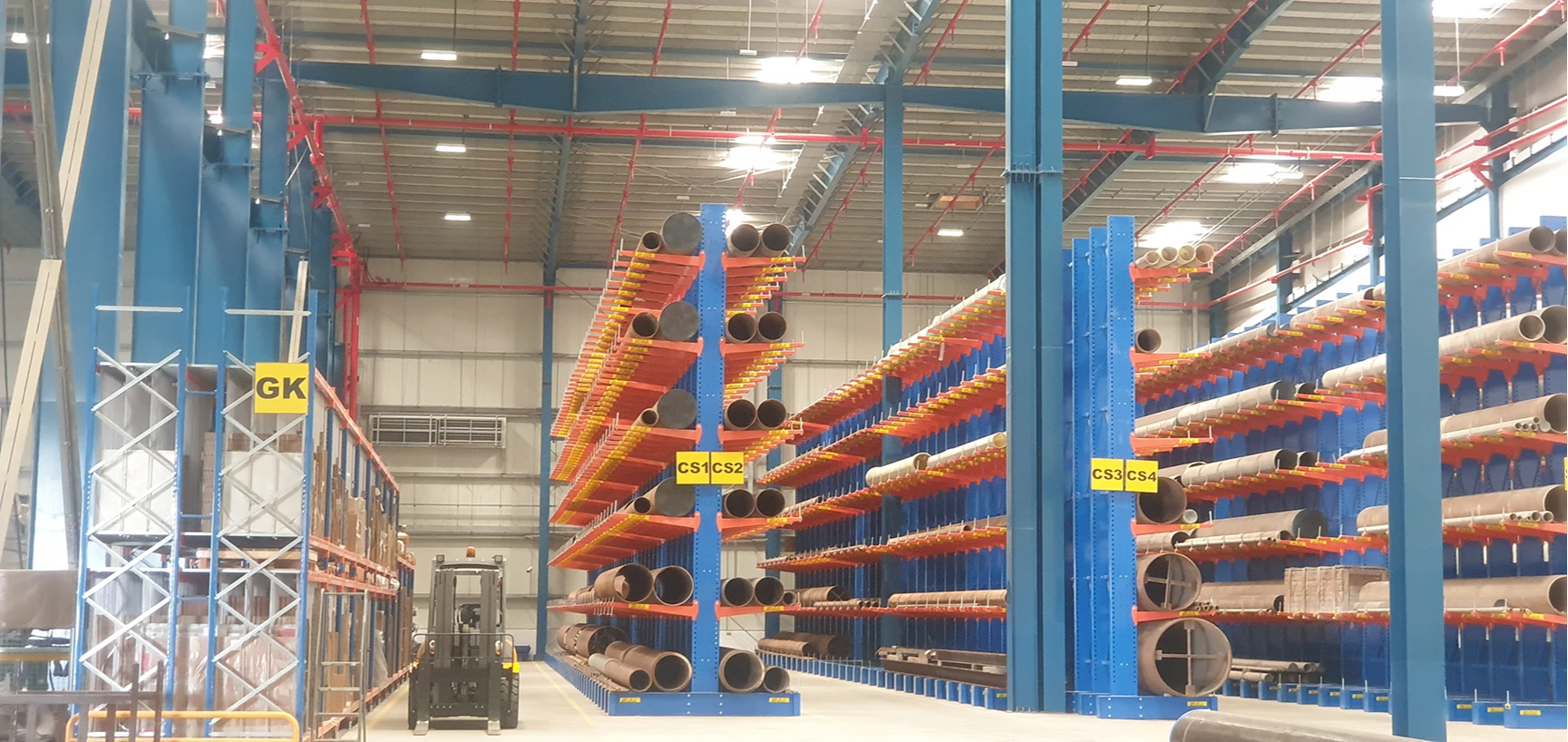
Cantilever Racking
Designed for long or bulky items like pipes and timber, Cantilever Racking eliminates front vertical obstructions, allowing for unrestricted access. It’s highly customizable based on product size and weight.
Not everything in a warehouse fits neatly on a pallet. Pipes, timber, profiles, and sheet materials present a storage challenge that conventional racking was never designed to solve — front uprights obstruct loading, standard bay widths restrict length, and the attempt to force irregular items into regular systems creates inefficiency and risk. The question is not how to make long products fit the racking. It is how to build a system around the products themselves.
Cantilever Racking does exactly that. There are no front columns interrupting the storage face — only horizontal arms extending from a central spine, leaving the full width and depth of each level open and unobstructed. Long or irregularly shaped items can be placed and retrieved cleanly, without the restrictions that make conventional pallet racking unsuitable for this category of product.
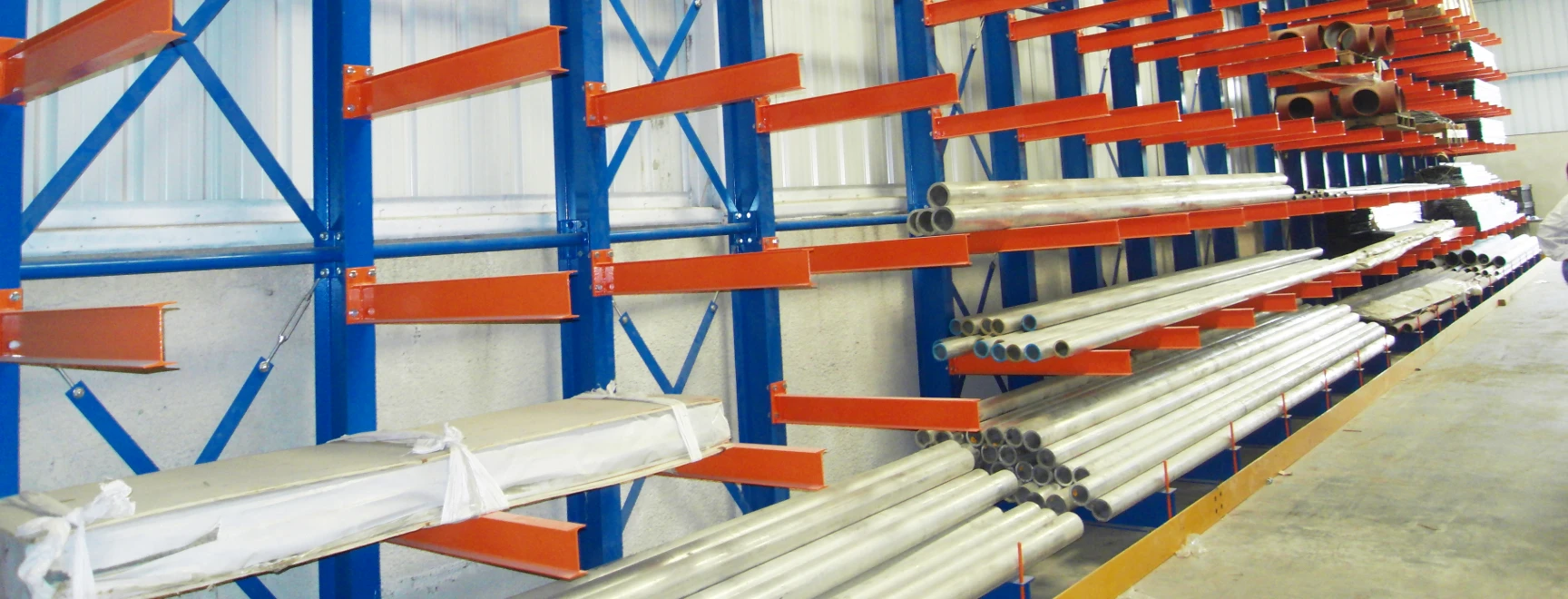
Built Around the Load. Open by Design.
Arm length, spacing, and load capacity are configured to the specific products and volumes in use — making the system as effective for lightweight timber boards as it is for heavy steel sections. Double-sided rows make full use of available floor space, and compatibility with mobile bases means the entire structure can be repositioned as operational needs change.
Aisle width is determined by the handling equipment in use. A counterbalanced truck suits wider aisles and simpler operations; a bidirectional reach truck reduces the aisle footprint significantly, recovering floor space without compromising access. The result is a system that is straightforward to specify, efficient to operate, and easy to reconfigure as product ranges evolve.